Research
1. Finite-Strain Viscoelasticity Theory
We define generalized strains as
where \(E(\lambda)\) is a scale function and \(\boldsymbol M_a\) are spectral projectors. The Green-Naghdi-type kinematics leads to the additive split
treated as an independent internal variable representing viscous strain.
2. Model Calibration
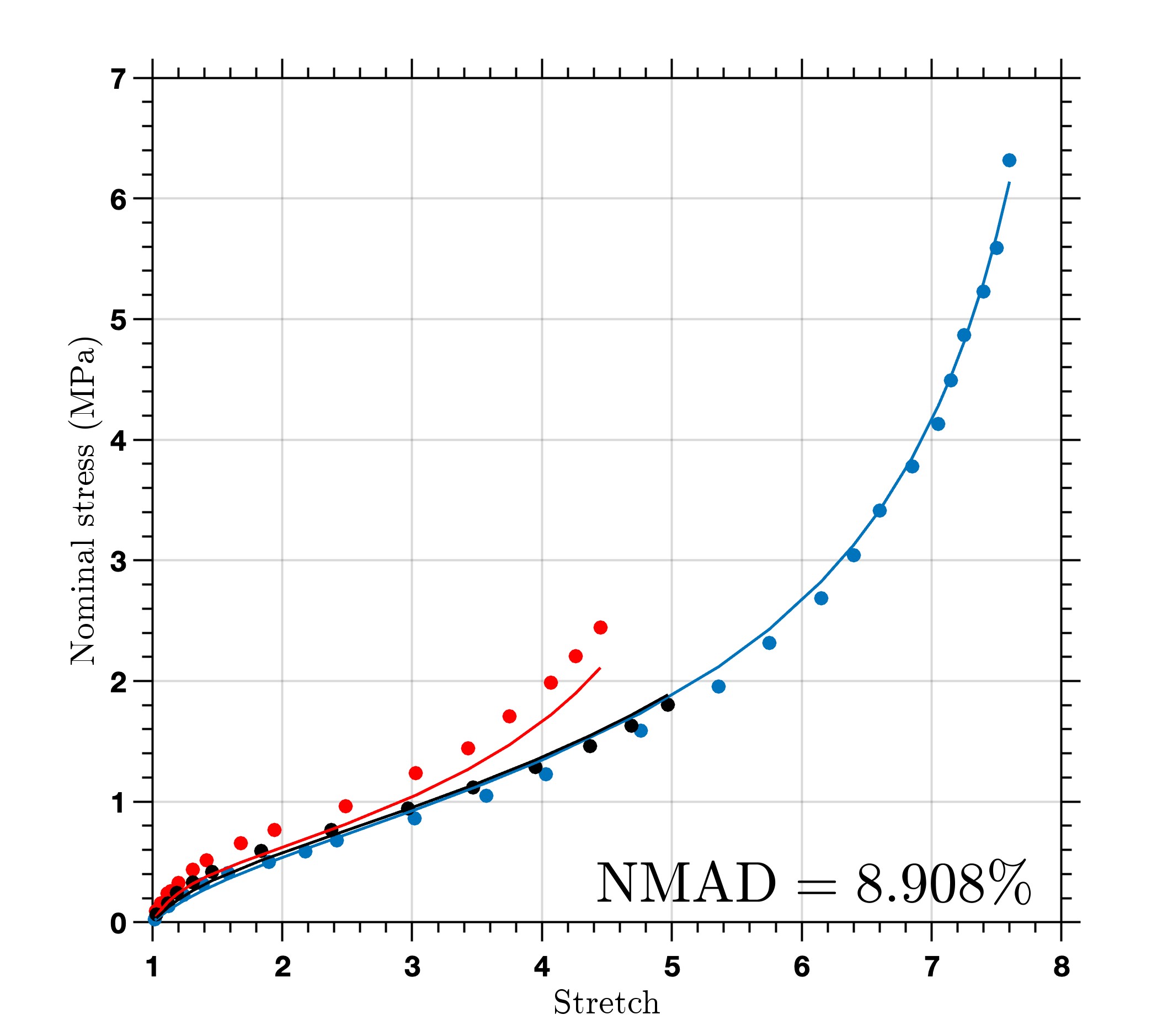
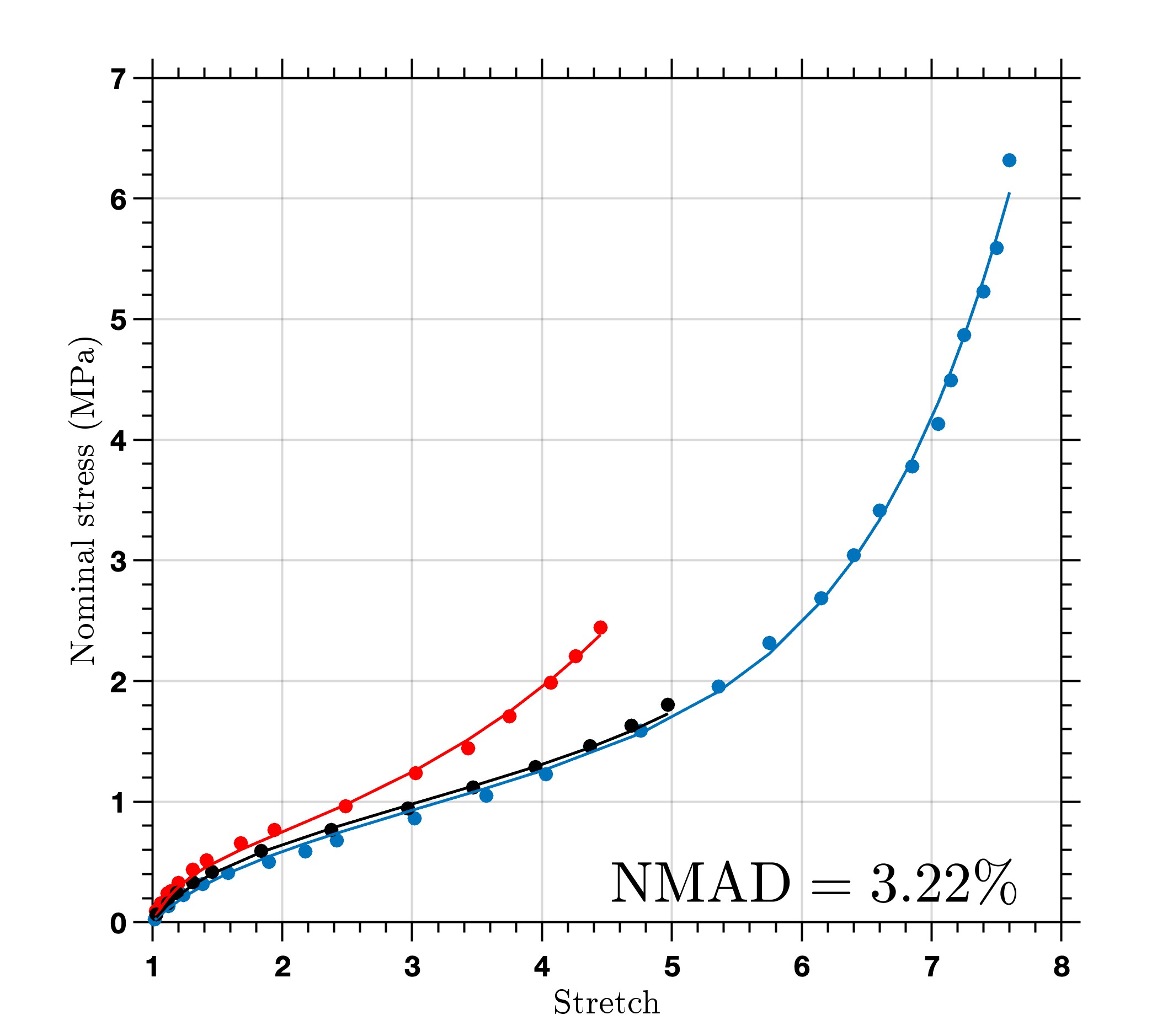
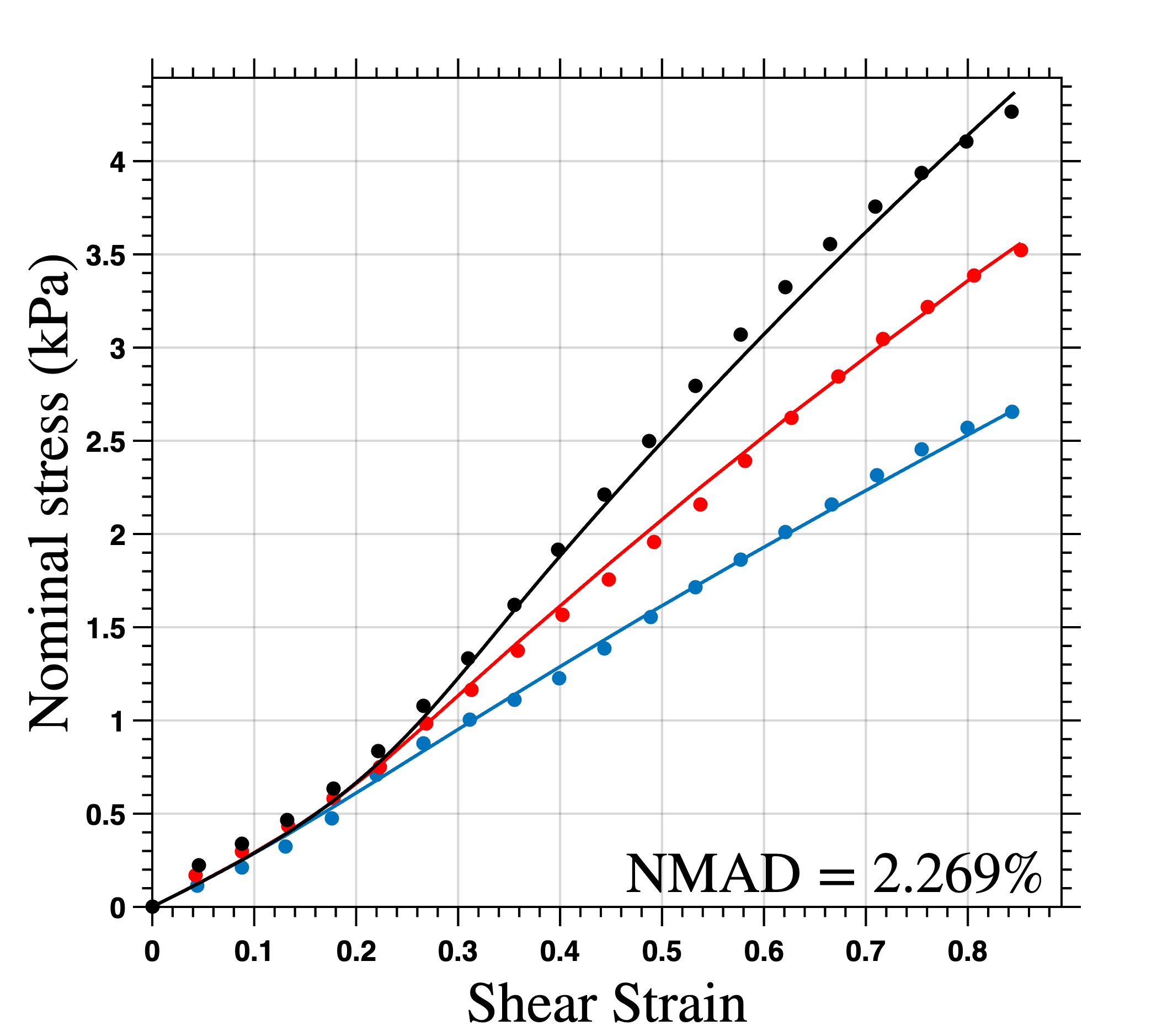
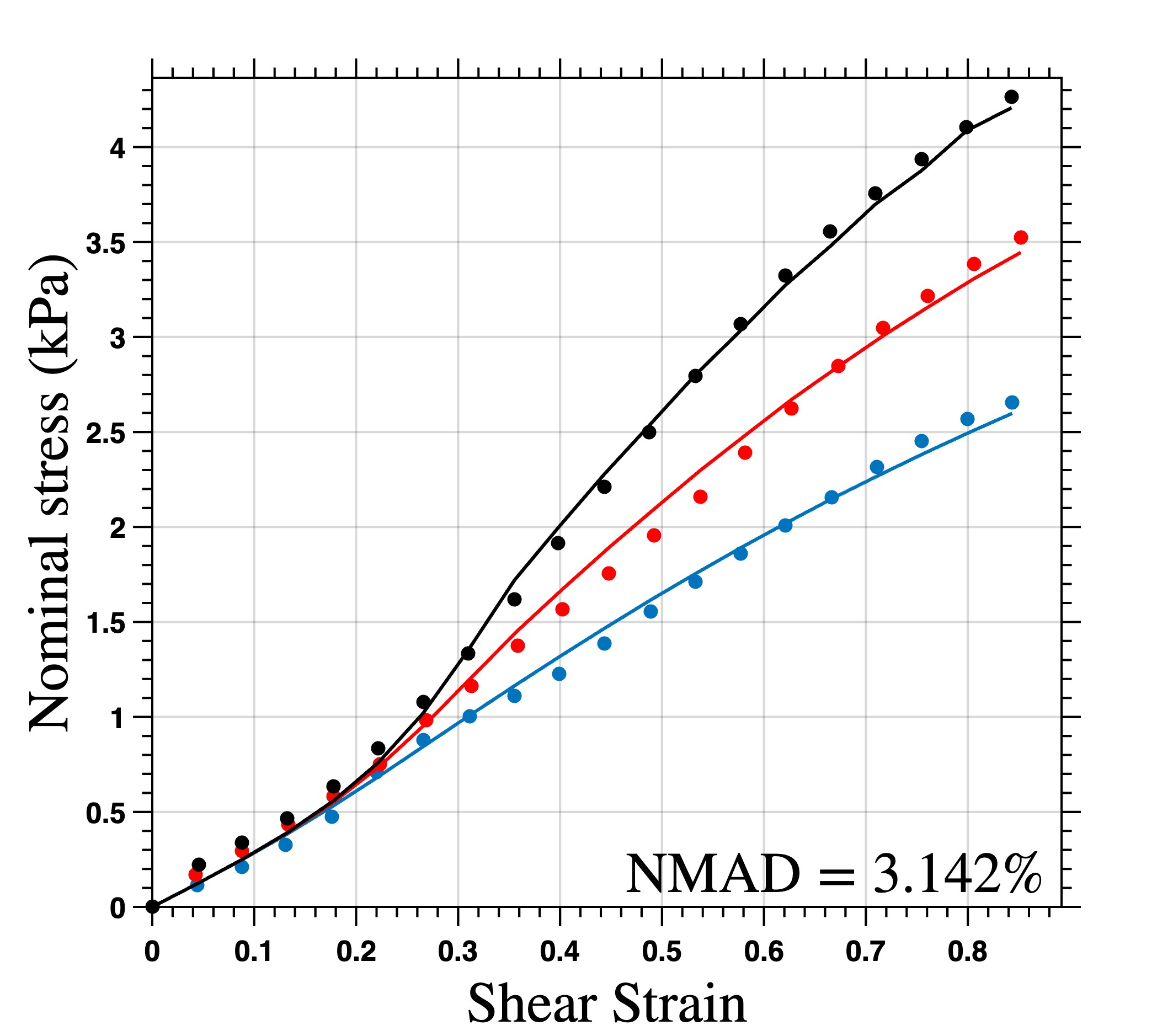
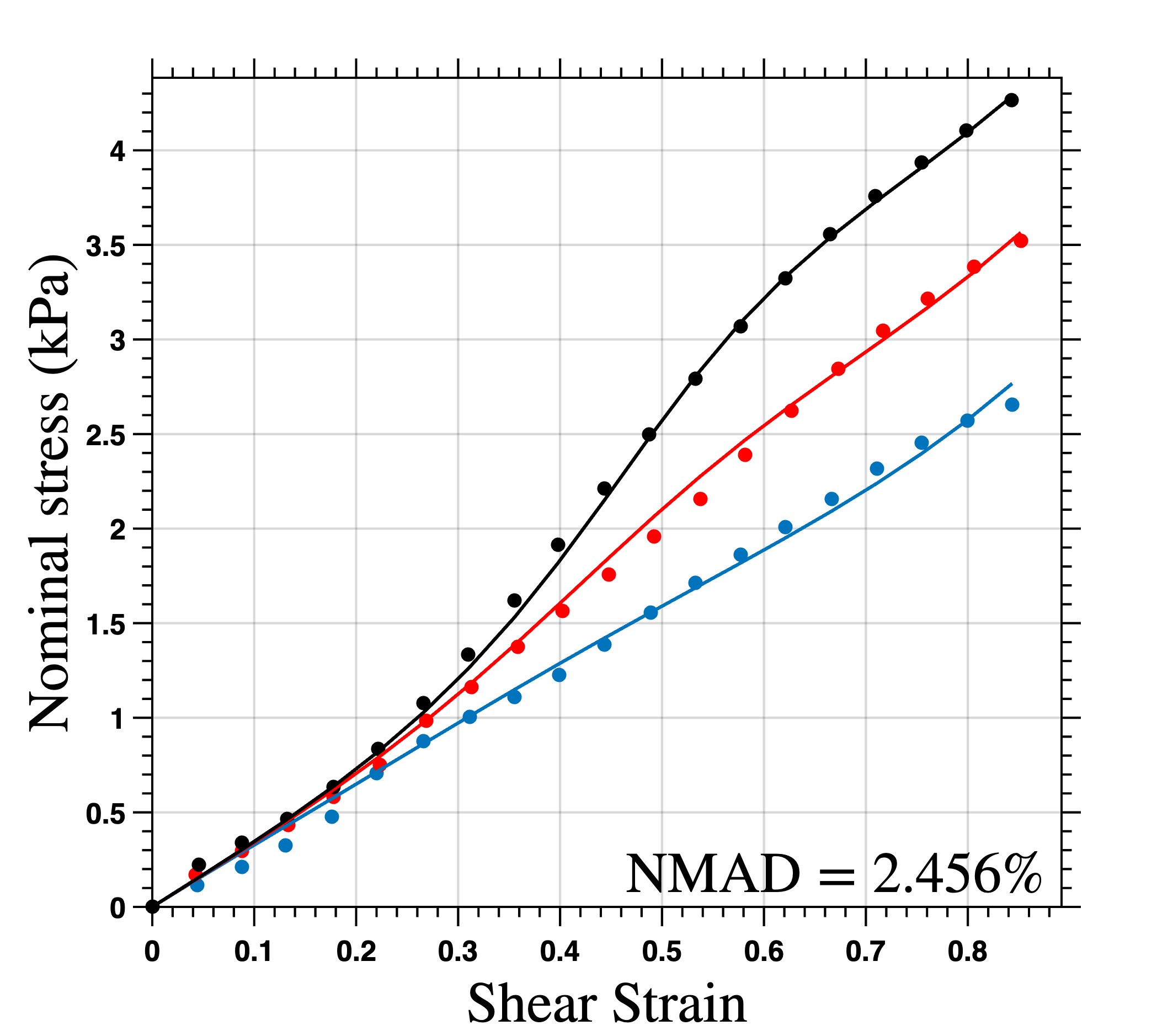
We calibrate hyperelastic models (Hill’s class, eight-chain, Ogden-type) and extend calibration to viscoelastic formulations based on the generalized-strain framework. When needed, we add damage effects (Mullins effect) to capture stress-softening and hysteresis.

GUI Calibration Application
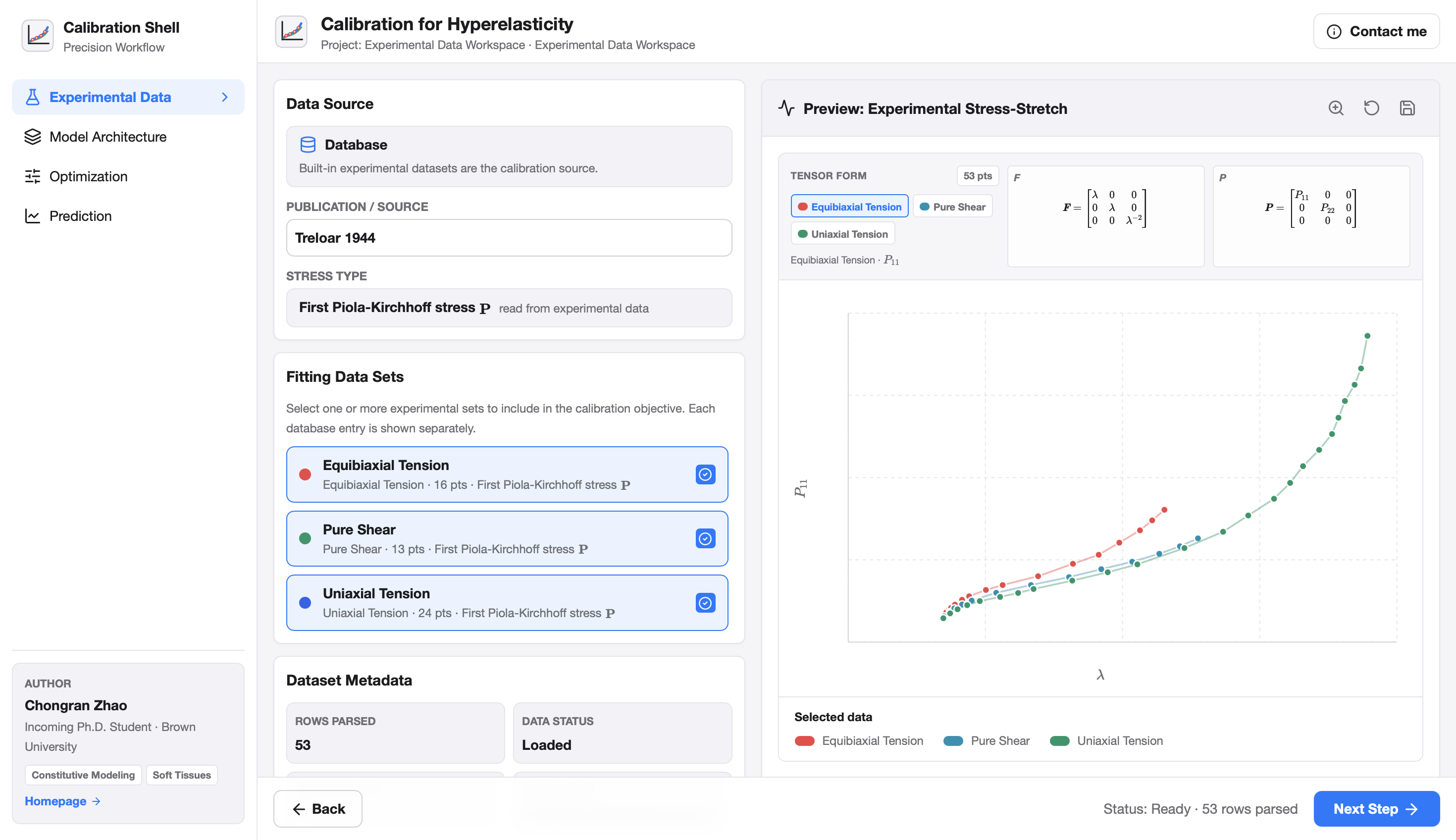
I also developed a GUI-based calibration application for hyperelastic models. The web version is available at Calibration Shell, and the source code is maintained in the Calibration-Hyperelasticity repository. The app supports built-in and user-provided datasets, lets you configure material models and parameters, runs the calibration, and then performs prediction on selected datasets.
3. Finite Element Simulation
We implement the calibrated constitutive models in the group’s open-source solver PERIGEE and run finite element simulations for verification and predictive studies.